01 / HOME BASE
Contractor HQ
Right-sized office, shop, storage, meeting and staging capacity for construction companies that want professional infrastructure without duplicating an enterprise campus.
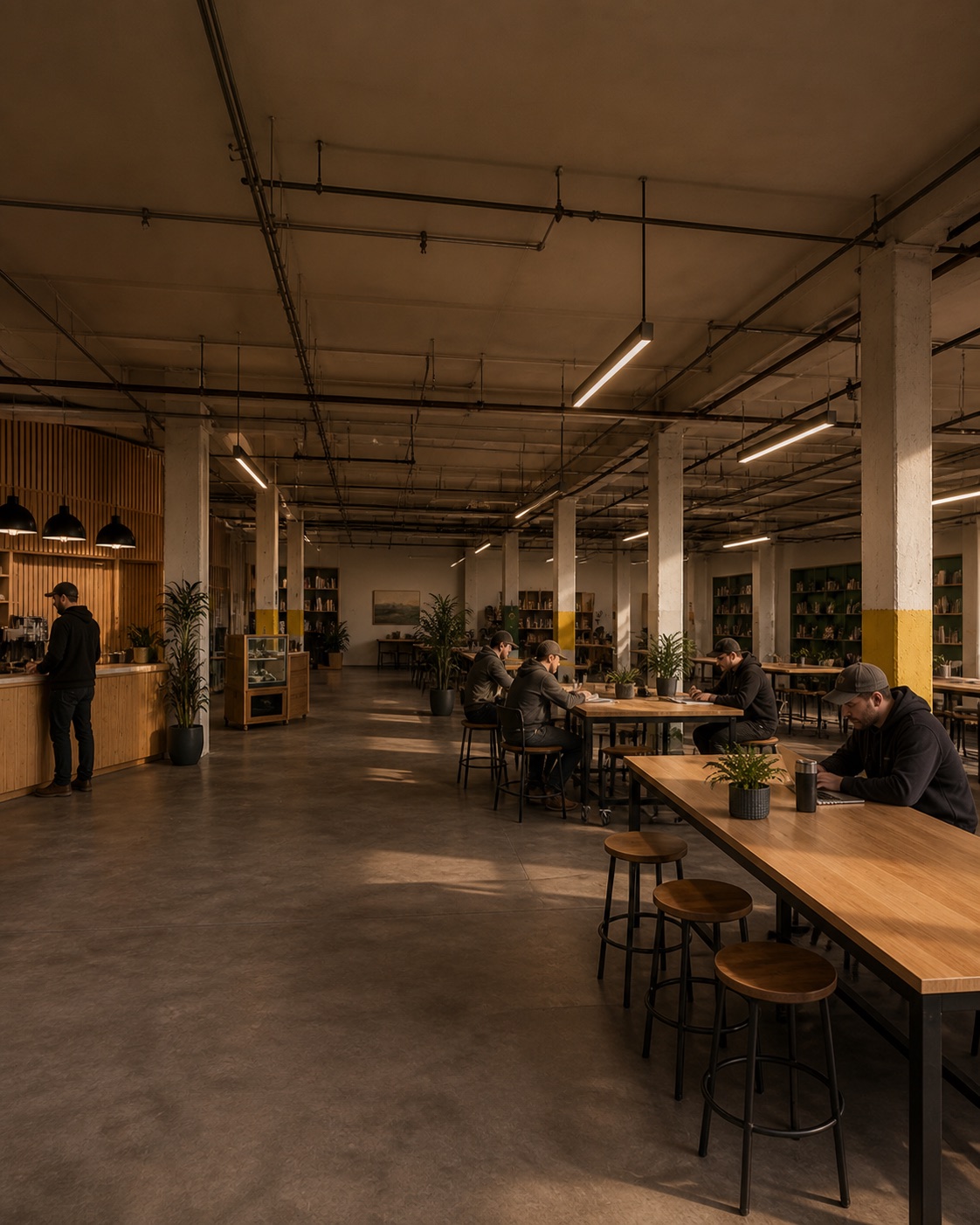
ForgeHub is the operating front door to the TradeForge ecosystem — a construction-specific campus where independent contractors can access workspace, storage, suppliers, equipment, professional services, training, workforce pathways, SiteOps and logistics without owning every piece themselves.
Traditional industrial space gives a contractor four walls. ForgeHub is designed around the entire workday: secure operating space, tools and storage, fleet and material access, workforce, business support, training, SiteOps and logistics. TradeForge connects the layers while partners operate the specialties they already do well.
Right-sized office, shop, storage, meeting and staging capacity for construction companies that want professional infrastructure without duplicating an enterprise campus.
Tools secure. ForgeSuite staged. Truck or trailer ready. Materials prepared. The value is productive time returned to the contractor instead of more errands.
ForgeHub stages the standardized gates, pods, temporary utilities and field infrastructure that SiteOps deploys to projects.
Suppliers, rentals, waste, food, insurance, estimating, legal, safety and other operators gain concentrated construction demand without TradeForge owning every asset.
Employers, schools, colleges, unions, training organizations and community partners gain a practical location to connect people with real construction pathways.
Parking, carpool, future shuttle, supplier movement and jobsite access become network functions instead of separate problems every contractor solves alone.
The ideal ForgeHub member is a good business whose next stage is being blocked by overhead. ForgeHub fills the gap between the home garage and a conventional commercial campus — then gives the business room to keep growing.
You have customers. Maybe employees. Tools everywhere. A trailer. A garage that stopped being a garage. Meetings in coffee shops. Materials scattered across suppliers. You do not need a 5,000 sq. ft. lease — you need a better operating system around the business you already built.
ForgeHub is designed to remove the errands, storage problems, coordination gaps and back-office friction surrounding the actual trade.
Academy is the education and workforce layer of TradeForge. It is not intended to replace schools, colleges, unions, apprenticeship systems or qualified trainers. It connects those organizations to employers, projects, ForgeHub and the broader construction ecosystem.
Approved exposure to real trades, employers, equipment, business operations and construction careers.
Training discovery, evidence, employer connections and practical learning delivered by the proper qualified organization.
Simple ways to mentor, demonstrate, sponsor, hire and give training providers feedback on real workforce needs.
ForgeHub is intended to become the staging, service, training, demonstration and redeployment backbone for SiteOps — temporary project infrastructure that follows construction work instead of sitting permanently at one property.
Managed access, storage, visitor/delivery coordination, temporary infrastructure and standardized project support.
Returned modules can be inspected, repaired, tested, inventoried and prepared for the next project.
Qualified partners can train workers and technicians on systems in a controlled Hub environment before they reach the field.
ForgeHub 001 is being developed around adaptive reuse of existing Brantford industrial infrastructure. The working strategy is to activate the areas that can create value first, preserve the long-term property pathway, and expand only when real occupancy, partners and operating revenue justify the next layer.
Long-term executive, partner, collaboration and expansion capacity. Activated only when the campus economics support it.
Training, workforce initiatives, grant/program working sessions, employer events, classrooms and flexible project rooms.
Construction businesses, professional support and shared meeting/estimating infrastructure.
Receiving, storage, operating bays, fleet/rental pickup, supplier fulfillment and SiteOps servicing closest to yard and truck access.
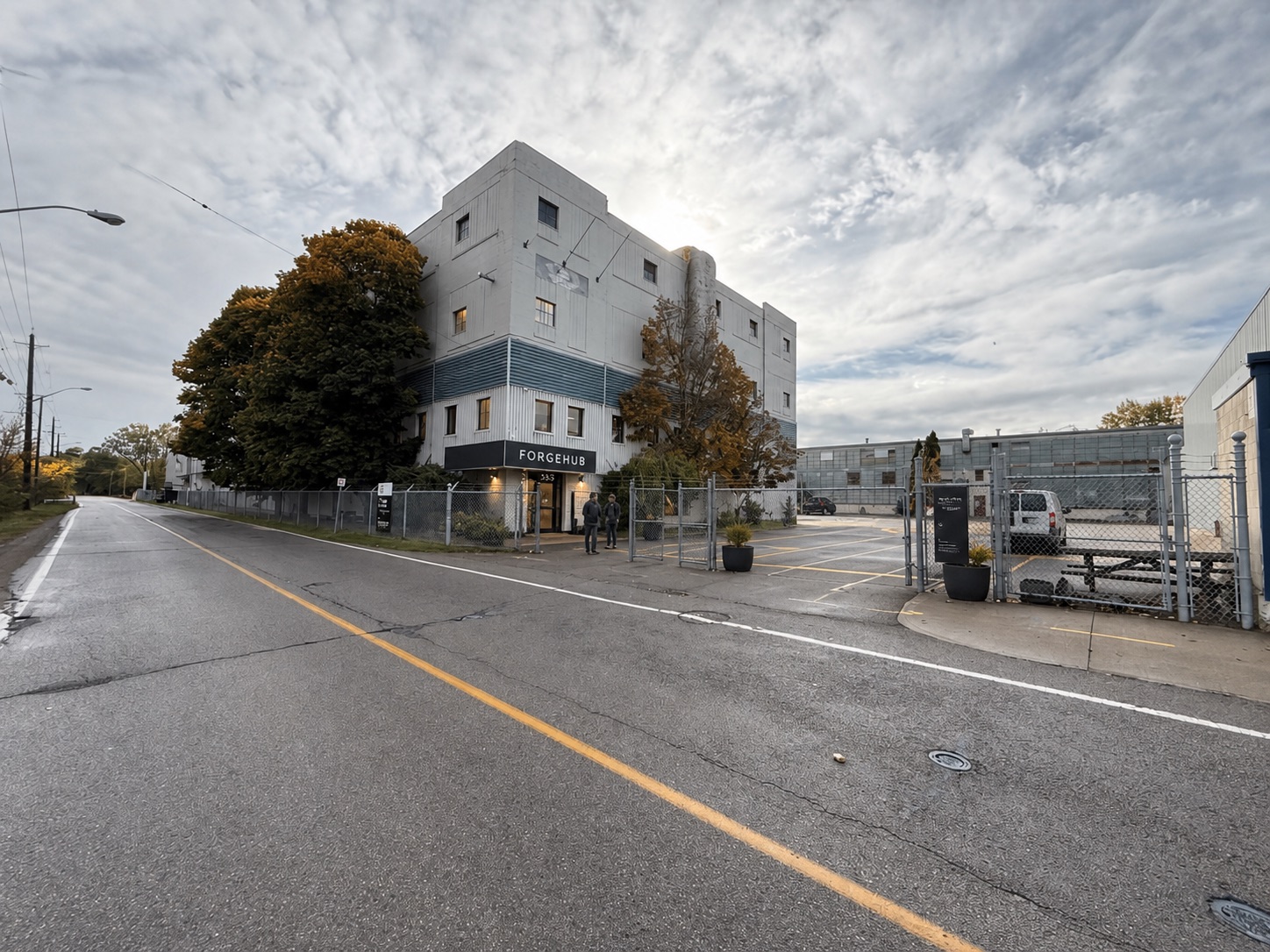
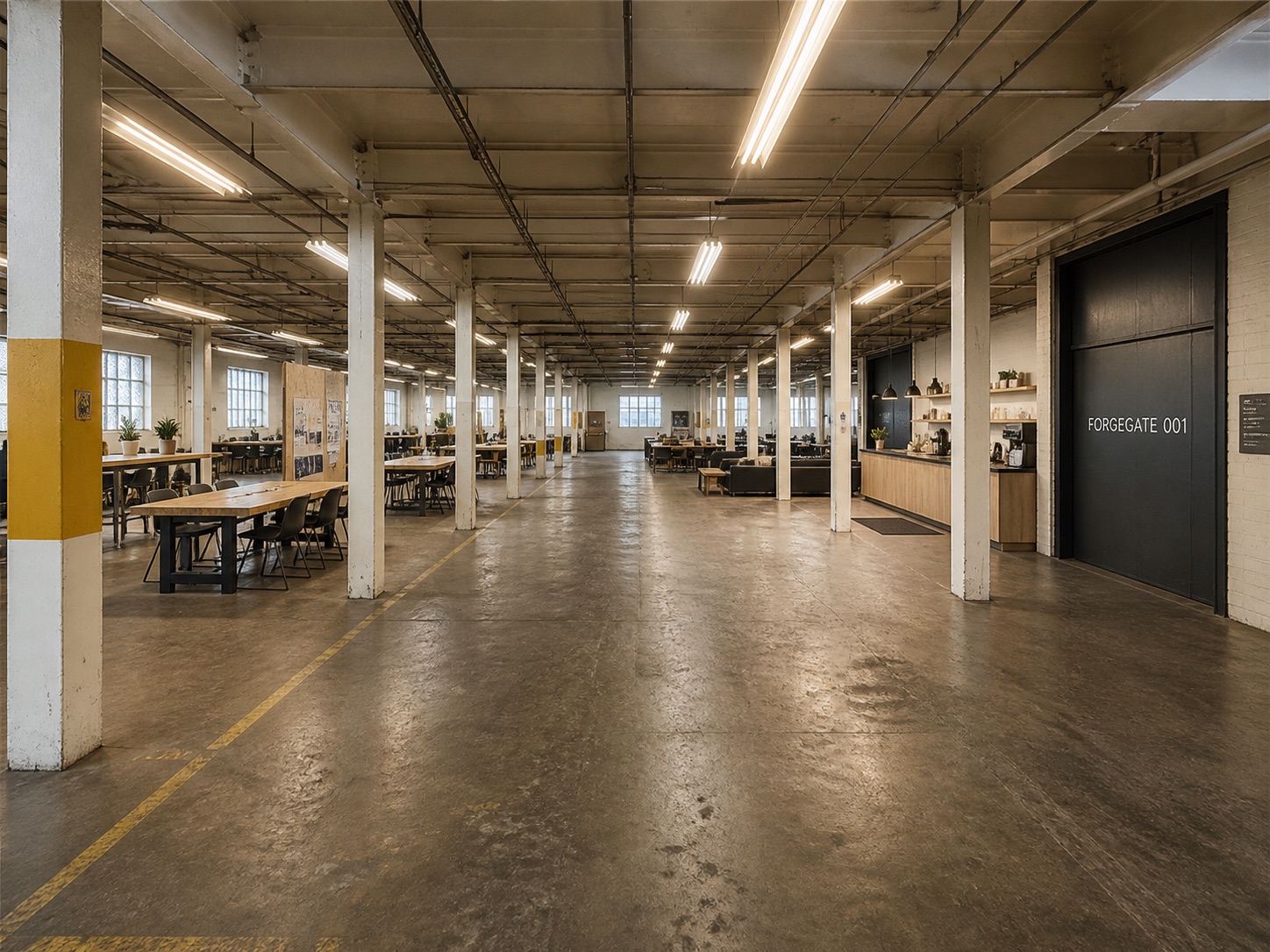
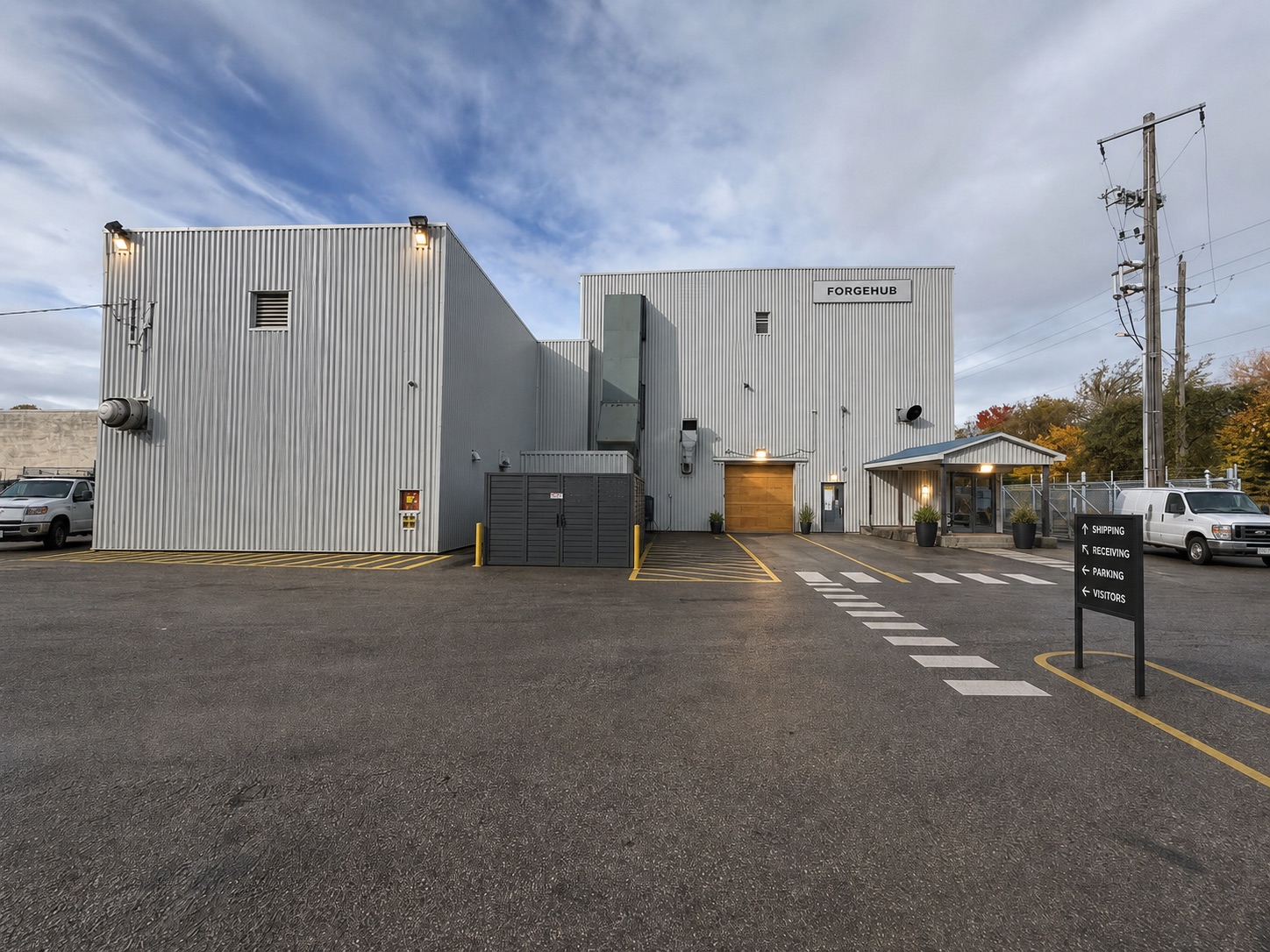
Visual concepts only. These images do not represent a secured property, completed building upgrades, capacity, site access, operating service, food service, learning delivery, membership, price, availability, tenant, partner, reservation or paid offering.
The model only works if every participant has a clear reason to be there. Select a role to see what ForgeHub is designed to accomplish for that group.
Use the pieces you need — operating space, storage, meeting rooms, supplier access, fleet/rental pathways, professional support, workforce and SiteOps — while TradeForge connects the experience.
These studies make the operating model tangible: a welcoming Academy, room to plan, and learning built around people who are growing a construction business. They are a direction for discussion — not a representation of current premises or delivered services.
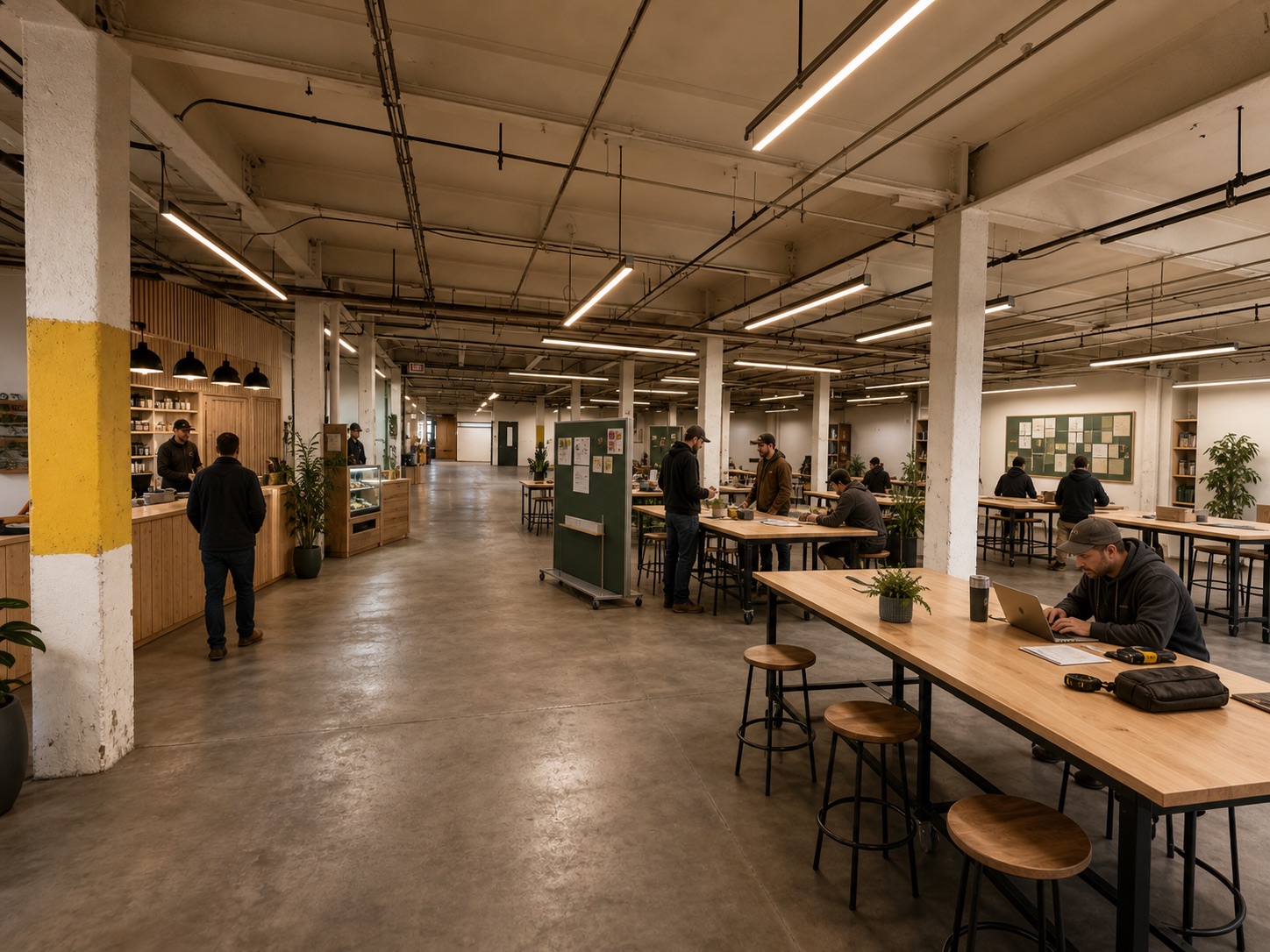


Visual concepts only. No property control, building improvement, physical capacity, occupancy, food service, learning delivery, membership, price, availability, tenant, partner or reservation is represented by these images.
ForgeHub gets stronger when specialized businesses bring what they already do well. TradeForge coordinates the identity, demand, reservations, standards, data permissions and member experience while qualified local operators retain responsibility for their regulated or asset-heavy services.
Member relationship · TradeForge ID · LIN / software · network standards · demand signals · reservations and commerce layer · experience design · data permissions · operating playbook.
Materials · rental fleets · trucks and trailers · coffee / food · professional practices · training delivery · waste · fuel · specialty services · other regulated or asset-heavy operations.
Materials, tools, equipment, trailers and vehicles can be staged or fulfilled by existing operators.
Accounting, insurance, legal, estimating, finance, safety, recruiting and other services can sit close to contractor demand.
Coffee, meals, vending, PPE, repair and other operators make ForgeHub worth starting and ending the workday from.
Partner discussions are exploratory until formal agreements exist. ForgeHub does not represent a company as confirmed, exclusive or endorsed unless explicitly announced.
ForgeHub intends to reserve flexible collaborative space where employers, public agencies, education, workforce organizations and TradeForge can work on real initiatives together. The goal is better project design, earlier program awareness and measurable economic-development outcomes — not privileged access to public funding.
Private-sector execution. Public-value collaboration.
A direct place to understand construction-business needs, supplier opportunities, employment-land issues and project barriers.
Employer-led needs can meet training providers, schools, apprentices, workforce agencies and community organizations in the same operating environment.
Design eligible initiatives properly, understand rules earlier and align public programs with specific outcomes. Grants remain subject to normal eligibility and approval processes.
ForgeHub 001 is the operating laboratory. The long-term network is designed as a hierarchy: local feeder points, temporary and regional Hubs, metro Gateways and project endpoints. Not every market needs the same footprint.
Compact access, pickup, storage, mobility or service point close to where workers and businesses already are.
Relocatable aggregation and support campus where a major construction market exists for 6–36+ months.
Durable contractor campus, SiteOps base, partner marketplace, Academy and service backbone.
Metro-edge collection and transfer infrastructure where demand exists before permanent capital is justified.
Permanent high-volume regional gateway connecting Hubs, workforce, suppliers, SiteOps and dense project markets.
The standardized project endpoint where workers, deliveries, visitors and SiteOps connect to the active jobsite.
Temporary infrastructure should be able to move when demand moves.
The first Hub is deliberately structured to avoid a capital-heavy speculative build. Every layer should create evidence, utilization or recurring revenue that makes the next layer safer to finance.
Environmental and property diligence, operating structure, space planning, tenant discovery, partners and baseline economics.
Initial contractors, yard/parking operations, receiving, shared rooms, access infrastructure and early partner services.
Occupancy growth, SiteOps staging, training/workforce pilots and measured utilization across the campus.
Additional floor activation, anchor services, logistics capability and recurring campus cash flow.
Prepare acquisition financing when justified by performance and translate Hub 001 data into Hub 002.
Do not finance the dream first. Make the asset financeable.
TradeForge membership is free. Members can build one persistent TradeForge ID and gain access to the network as benefits roll out — including LIN, profiles, opportunities, ForgeHub access, Academy, partner offers, mobility and a planned multi-provider fuel-savings layer. Commercial services are paid only when intentionally used.
Carry roles, evidence, work history and relationships through your construction career.
Fuel savings, workwear/PPE, rental, supplier and other benefits are being developed with partners. Availability and savings vary.
Verification and reputation cannot be purchased as a membership tier.
ForgeHub is not looking for generic leads. We are validating the people and businesses that make the first campus useful: contractors, suppliers, service operators, trainers, workforce organizations, property partners and capital. Tell us what you need or what you can operate. This is an interest signal only — no payment, reservation or commitment.